

A painful bump that shows up in the same place every month can feel frustrating, confusing, and unfair. One month it is on your chin.
Next month, it is back along your jawline. Sometimes it appears on a lower cheek, near your neck, or in another familiar spot that seems to flare right on schedule.
Recurring acne often points to a pattern, not bad luck. Skin can react to repeated pore clogging, lingering inflammation, hormone shifts, friction, stress, product buildup, or habits that keep irritating the same area.
- Why does acne keep returning to the same location?
- What are your hormones doing behind the scenes that makes that same spot flare again and again?
Learning the pattern can help you stop treating each pimple as a random emergency and start seeing what your skin may be responding to.
What it means when acne keeps coming back in the same place
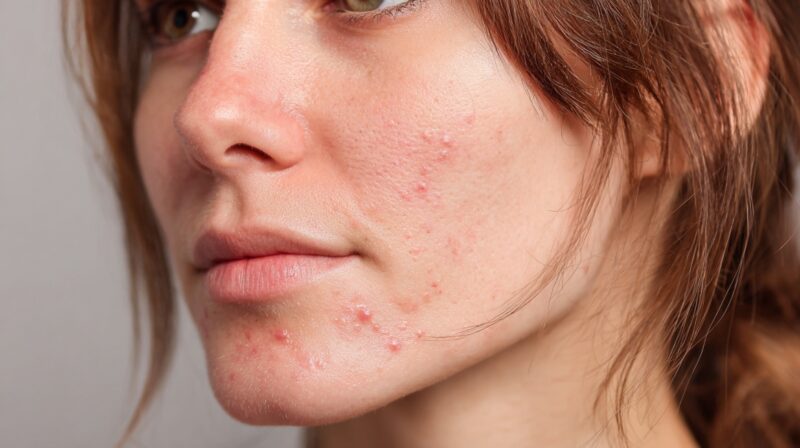
A pimple can return to the same spot because the same pore or hair follicle keeps getting clogged or inflamed.
Even after redness fades and the bump looks smaller, irritation may still be active below the surface.
Cystic acne can be especially stubborn because it forms lower in the skin and may not fully settle as quickly as it appears to.
Some breakouts feel like they disappear, then return in the exact same place weeks later.
In many cases, deeper inflammation was still present, or the pore stayed vulnerable to oil buildup, dead skin cells, bacteria, and swelling.
Outside irritation can also keep one area from breaking out.
- Rubbing or touching
- Phone contact
- Masks
- Helmets
- Pillowcases
- Pore-clogging skin or hair products
A chin that rests in your hand, a phone pressed to one cheek, or a mask rubbing along the jaw can keep creating the same cycle.
Lifestyle factors can add more pressure. Poor sleep, stress, high sugar intake, and inconsistent skincare habits may all make recurring spots more likely.
Acne is rarely caused by one single factor. More often, it develops when several triggers stack together in the same area.
Hormonal acne pattern: timing, location, and type
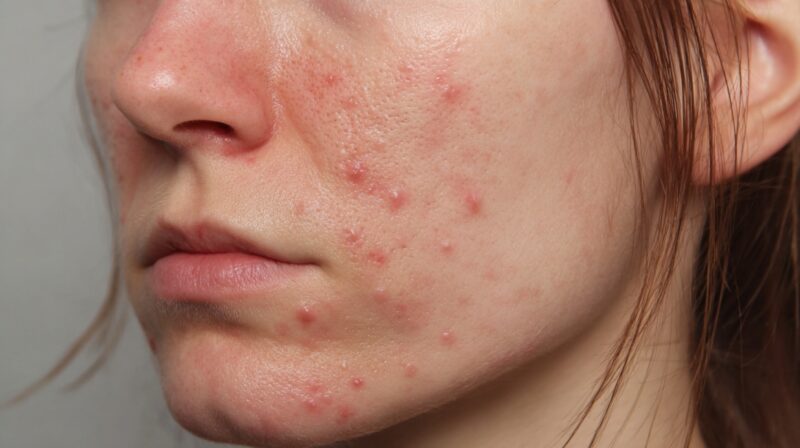
Hormonal acne often has a recognizable rhythm. Many people notice breakouts about 7 to 10 days before a period, followed by calmer skin once menstruation begins or ends.
That timing can be a major clue that hormones are involved.
| Clue | What It Suggests |
|---|---|
| Timing around a menstrual cycle | Breakouts linked to hormonal fluctuations |
| Breakouts on lower face | Common in hormonal acne (chin, jawline, cheeks, neck) |
| Painful, swollen, cystic bumps | Indicates deeper, inflammatory acne |
| Tender nodules under the skin | Suggests hormonal or cystic acne rather than surface-level breakouts |
| Adult-onset acne | Acne appearing later in life is often hormonally driven |
| Monthly flares | Recurring pattern tied to hormone cycles |
| Poor response to OTC products | Basic treatments may not address hormonal causes |
Location matters too. Hormonal breakouts commonly appear on the chin, jawline, lower cheeks, and neck.
Acne in these areas is often tied to oil glands that respond strongly to hormone changes.
Type can also offer clues. Hormonal acne is often more painful, swollen, inflamed, cystic, or slow to heal. Instead of tiny surface bumps, it may appear as tender nodules under the skin.
Adult-onset acne, monthly flares, lower-face breakouts, and poor response to basic over-the-counter products can all suggest a hormonal pattern.
Not every breakout on the chin or jaw is hormonal. Still, repeated monthly cysts in those areas often point to internal changes happening on a cycle.
What your hormones are actually doing

Androgens, including testosterone, can stimulate sebaceous glands. Sebaceous glands produce sebum, the oily substance that helps protect your skin.
Problems begin when oil production increases too much or when pores have trouble clearing that oil.
When androgen activity rises or becomes more noticeable compared with other hormones, sebaceous glands may produce more sebum. Extra oil can mix with dead skin cells and bacteria inside the pore.
Once that mixture becomes trapped, swelling and inflammation can develop.
Hormone-sensitive areas may flare again and again because their oil glands are more reactive.
Chin, jawline, lower cheek, and neck breakouts often follow that pattern.
Skin in those areas may not be “dirty” or poorly cared for. It may simply be reacting to hormone signals that increase oil, clogging, and inflammation.
Trying to dry out one painful bump over and over may not fix the cycle.
A better approach looks at timing, oil production, inflammation, skincare habits, and possible hormonal triggers together.
Why do breakouts often happen before your period?

Premenstrual breakouts are common because hormones shift across the menstrual cycle. Estrogen changes throughout the month, and lower estrogen before a period can make androgen activity more noticeable.
When androgens have greater influence, oil glands may work harder.
Progesterone can also affect the skin during parts of the cycle. For some people, skin feels oilier, puffier, or more easily inflamed before menstruation. More oil plus higher inflammation can create ideal conditions for clogged pores and painful acne.
Many hormonal breakouts flare 7 to 10 days before a period. Some people also notice flares around ovulation, during stressful periods, or after starting, stopping, or switching birth control.
Hormonal shifts that cause monthly breakouts do not stop at your skin.
Around the days before your period, inflammatory compounds called prostaglandins may also make gum tissue more sensitive, swollen, or prone to bleeding.
If gum pain, bleeding, swelling, or tooth discomfort feels sudden or severe, contacting Akutt Tannlege Oslo can help you get urgent dental support.
Tracking your skin alongside your cycle can make these changes easier to spot.
- When a breakout begins
- Where it appears
- How painful it feels
- How long it takes to heal
After a few cycles, a pattern may become clear.
Why is chin and jawline acne so common
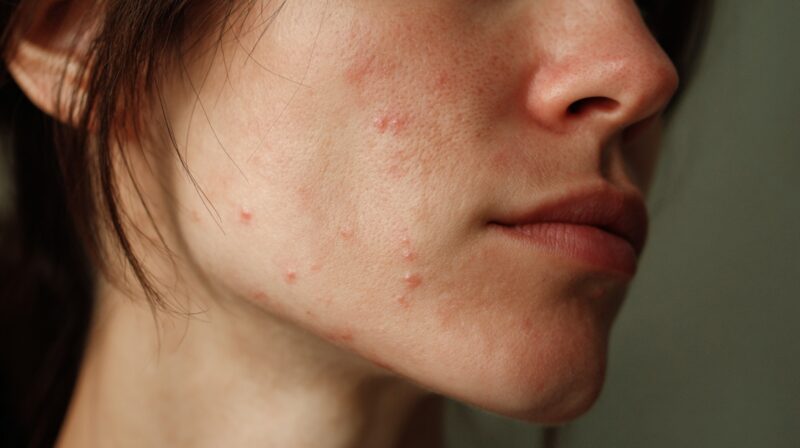
Chin and jawline acne is common because the lower face has oil glands that are sensitive to hormone activity. Jawline, chin, lower cheeks, and neck breakouts are classic areas for hormonal acne.
Painful bumps in these zones often feel deeper and more tender than surface pimples. They may swell slowly, last longer, and leave redness or marks after they calm down. Monthly cysts in the same lower-face area are especially suggestive of a hormone-linked pattern.
Not every chin pimple means a hormonal issue is present.
| Trigger | How It Contributes |
|---|---|
| Skincare products | Can clog pores or irritate sensitive areas |
| Makeup | May block pores if not removed properly |
| Lip balm | Can spread oils and clog pores around the mouth |
| Toothpaste residue | Ingredients can irritate skin near the lips and chin |
| Masks | Trap moisture and bacteria, leading to breakouts |
| Touching | Transfers bacteria and oils from hands to face |
| Phone contact | Transfers dirt and bacteria to the skin during calls |
Still, acne that returns every month in the same chin or jawline area deserves attention as a pattern.
A consistent routine that supports the skin barrier, clears clogged pores, and reduces inflammation may help. Persistent painful acne may also need professional treatment, especially when cysts are frequent or leaving scars.
Other triggers that can make monthly acne worse
Stress can make hormonal acne worse. Higher cortisol levels can increase inflammation and may influence oil production. During stressful weeks, breakouts may feel more painful, swollen, or harder to calm.
Birth control changes can also affect skin. Starting, stopping, or switching methods may temporarily shift hormone levels.
Some people notice clearer skin with certain options, while others notice new breakouts during adjustment periods.
PCOS or another hormonal imbalance may also play a role.
- Irregular periods
- Weight changes
- Excess facial or body hair growth
- Scalp hair thinning
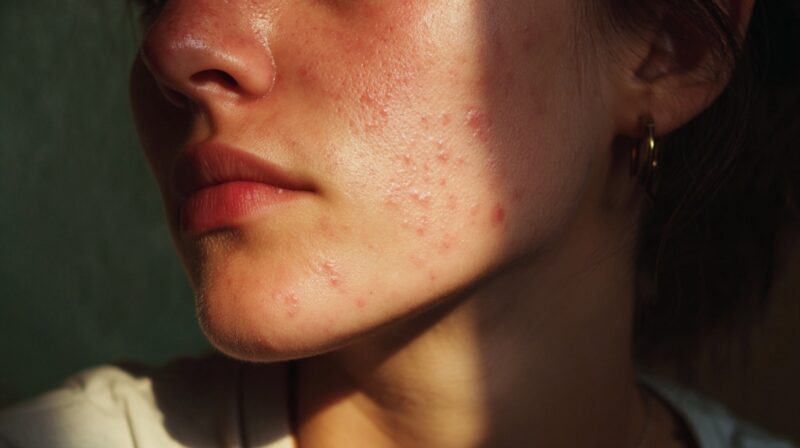
Those signs may point to a hormone pattern that needs evaluation.
Diet and blood sugar may matter for some people. High-sugar eating patterns can affect insulin levels, and insulin resistance has been linked with hormonal acne triggers.
Dairy may worsen acne for certain individuals, although responses vary.
Poor sleep can add another layer. Sleep affects stress regulation, hormone balance, immune function, and skin repair.
When sleep is consistently poor, breakouts may heal more slowly and inflammation may last longer.
Your skin is giving you a pattern to decode
Monthly breakouts in the same spot are often a clue, not a personal failure.
Your skin may be reacting to a mix of hormone shifts, oil production, inflammation, friction, stress, skincare products, lifestyle habits, or a deeper health pattern.
A recurring painful bump should not only be treated as something to dry out again and again. Better results often begin with noticing the cycle that keeps creating it.
Timing, location, breakout type, stress levels, birth control changes, sleep, diet, and product habits can all offer useful information.